
Champions belts
Championship Belt Materials: Zinc vs Brass vs Steel 2026
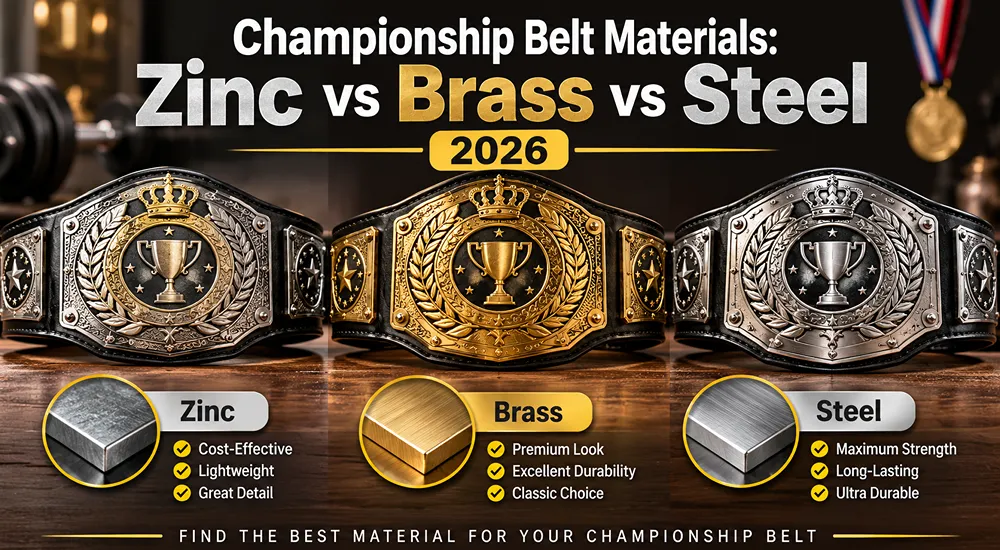
Oct
Championship Belt Materials can change the way a belt looks, feels, wears, and fits your budget. Two belts may use the same artwork and gold finish yet feel completely different when you pick them up. The base metal, plate thickness, manufacturing method, finish, and strap all play a role.
For collectors, sports leagues, gyms, wrestling fans, and event organizers, choosing the right material is not just about finding the heaviest belt. The better choice depends on how the belt will be used and how much detail you want in the final design.
Championship Belt Materials Compared
The three materials buyers are most likely to consider are zinc alloy, brass, and steel or stainless steel. Each has a different role in championship belt construction.
| Material | Main Advantage | Best For | Typical Position |
|---|---|---|---|
| Zinc Alloy | Excellent detail and balanced cost | Custom belts, replicas, leagues, gifts | Standard to premium |
| Brass | Heavier feel and fine engraving | Collectors, premium awards, display | Premium |
| Steel | Strong and practical construction option | Selected plate designs and specialty builds | Depends on construction |
Current belt industry guides generally position zinc as the practical choice for complex designs and strong value, while brass is used for heavier, more premium builds. Stainless steel and steel also appear in some belt constructions, depending on the manufacturer and design.
Zinc Championship Belts: Balanced Detail and Value
Zinc alloy is one of the most common choices for championship belt plates. It works especially well when the design contains detailed logos, raised elements, curves, and multiple decorative sections.
Another advantage is flexibility in custom production. Die-casting can reproduce complex shapes without requiring every detail to be machined from a solid block.
That makes zinc a strong option for sports leagues, wrestling replicas, fantasy championships, gym awards, gifts, and custom orders where design detail matters but the belt does not need the maximum possible weight.
However, the word zinc alone does not tell you whether a belt is high quality. Plate thickness, casting quality, polishing, engraving, plating, and strap construction still matter.
Brass Championship Belts: Premium Weight and Detail
Brass is a popular upgrade when the buyer wants a heavier and more premium feel. Brass is denser than zinc, so the same basic design can feel more substantial in the hand. Current belt material comparisons also note that brass can hold fine engraving and produce a warmer visual character under gold plating.
Brass is particularly attractive for permanent gym championships, collector pieces, premium awards, and belts that will be handled repeatedly over many years.
The tradeoff is simple: brass generally costs more and can make a full-size belt noticeably heavier. That extra weight is impressive for display but may be less convenient when the belt is worn for long periods.
For an example of a premium build, see our Big Gold Dual Plated 24K Gold Championship Belt.
Steel Championship Belts: Where They Fit
Steel and stainless steel can also be used in championship belt construction. Current listings show stainless steel being used for main plates or components in some replica designs, sometimes combined with brass side plates or other materials.
Steel can make sense when a particular design or construction calls for it. Still, buyers should not judge a belt simply because the listing says steel. Ask exactly what parts use steel, how thick the plates are, what finish has been applied, and how the plates are attached to the strap.
In other words, steel is a construction choice rather than an automatic quality upgrade.
Why Plate Thickness Matters as Much as Material
One of the easiest buying mistakes is focusing only on the metal type. A thin plate can feel lightweight even when the material itself is strong. A thicker plate can create a much more substantial championship look.
For custom belts, compare material and thickness together. A 4mm zinc belt and a 6mm zinc belt can feel very different. The same applies when comparing different metals.
Our championship belt thickness guide explains the differences between common plate thickness options.
How Championship Belt Materials Affect Weight
Material choice is closely connected to weight. Brass is denser than zinc, so brass constructions generally produce a heavier feel when the overall design is similar. That can be desirable for collectors and presentation pieces, but it is not always ideal for a belt that will travel frequently.
Weight also depends on plate size, thickness, number of side plates, hardware, strap construction, and decorative elements. That is why material alone cannot predict the final weight.
Does CNC Mean a Different Material?
No. CNC describes the machining process, not the base metal.
A CNC championship belt can be machined from brass, zinc, or another suitable metal. The advantage is precision in cutting and engraving rather than a specific material. This makes CNC useful when a design requires clean edges, exact logo reproduction, or highly controlled detail.
How to Choose the Right Championship Belt Material
Start with the purpose of the belt rather than the material name.
- Choose zinc when you want strong design detail, good weight, and balanced value.
- Choose brass when weight, premium feel, fine engraving, and long-term presentation matter most.
- Consider steel when the specific construction or design benefits from steel or stainless steel components.
- Compare thickness before making a final decision because plate gauge affects the finished feel.
- Check the strap because a premium plate paired with a poor strap can still produce a disappointing belt.
- Ask about finishing so you know whether the surface uses plating, polishing, paint, or another treatment.
Questions to Ask Before Buying a Championship Belt
A seller should be able to explain the major construction details clearly. Ask these questions before placing an order:
- What is the exact plate material?
- How thick are the plates?
- Are the plates cast, stamped, engraved, or CNC machined?
- What type of finish or plating is used?
- What material is the strap?
- What is the approximate finished weight?
- Can the same design be produced in another material?
Clear answers help you compare belts properly instead of choosing based only on product photos.
FAQ About Championship Belt Materials
What is the best material for a championship belt?
There is no single best material for every buyer. Zinc is a strong all-around option, brass is well suited to premium and display-focused belts, and steel can work well for specific constructions.
Are brass belts better than zinc belts?
Brass can be the better choice when you want a heavier and more premium feel. Zinc can be the better choice when you want detailed designs with a more balanced cost and weight.
Are championship belts made from real metal?
Quality championship belts commonly use real metal plates, but the exact material varies by manufacturer and product. Always check the stated plate material and thickness before buying.
Is CNC a metal type?
No. CNC is a computer-controlled machining method. The actual base metal can vary.
Does a heavier belt automatically mean better quality?
No. Weight is only one factor. Construction quality, plate thickness, engraving, plating, strap material, hardware, and finishing all matter.
Final Thoughts
The right material depends on what you expect from the belt. Zinc offers a strong balance for many buyers. Brass is attractive when premium weight and refined detail matter. Steel can be useful for specific designs and construction requirements.
Before ordering, compare the material together with plate thickness, manufacturing method, finish, strap, and intended use. A well-matched combination will give you a better result than choosing a material simply because it sounds more premium.