
Champions belts
Championship Belt Size Guide: How to Measure Adults Belt in 2026
Nov
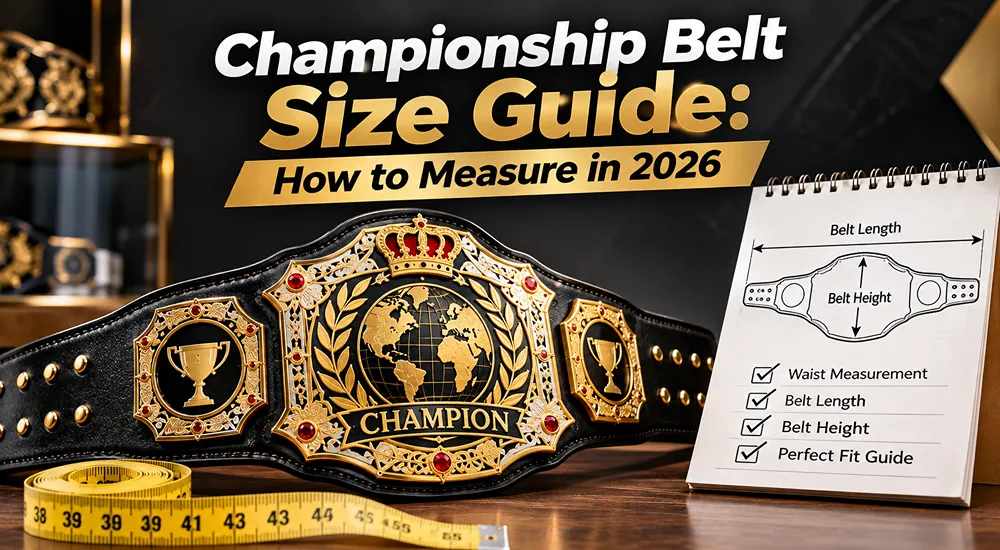
Championship Belt Size Guide helps you choose the right fit before ordering a custom or replica title belt. The correct size depends on where the belt will be worn, the wearer’s measurement, the strap adjustment range, and whether the belt is meant to be worn or displayed.
One common mistake is choosing a championship belt based only on the total strap length. A belt can have a long strap and still fit differently depending on the snap positions, plate size, and where it sits on the body.
Championship Belt Size Guide: How Sizing Actually Works
Championship belts are usually measured in more than one way. The total strap length tells you how long the belt is when laid flat, while the usable fit depends on where the snaps or fastening points allow the belt to close.
That means two belts with similar overall lengths can have different practical fits.
For example, current belt makers commonly use adjustable snap positions, while some adult replicas list a maximum waist range rather than suggesting that the entire strap length equals the wearable waist size. citeturn121191search3turn121191search7
How to Measure Yourself for a Championship Belt
Method 1: Measure Where You Will Wear the Belt
Stand naturally and wrap a soft measuring tape around the part of your waist or hips where the championship belt will actually sit.
Do not measure your trouser size and assume it is your championship belt size. A championship belt is usually worn differently from a normal clothing belt, especially when the plate and strap sit over clothing.
Method 2: Measure Over Your Event Clothing
For a belt that will be worn during a ceremony, weigh-in, photo session, or sporting event, measure over the clothing you expect to wear.
A belt intended to fit over a T-shirt can require a different measurement from one that will be worn over a hoodie, jacket, or thick entrance gear.
Method 3: Measure a Belt That Already Fits
If you already own a championship belt that fits comfortably, use it as a reference. Check the point where the strap normally closes and compare that measurement with the sizing information for the new belt.
This is useful because it reflects how you actually wear a belt rather than relying only on a clothing label.
Adult Championship Belt Size
Adult championship belts are commonly built around a full-size strap with multiple adjustment positions. The exact dimensions vary by manufacturer and design.
Current full-size examples commonly use straps around 50 to 52 inches long, while the practical maximum waist can be lower than the total flat strap length. citeturn121191search0turn121191search5turn121191search7
That is why you should always check the actual fit range before ordering rather than choosing a belt simply because the product says “adult size.”
Kids and Smaller Championship Belt Sizes
Children and smaller athletes usually need a shorter strap and a smaller overall plate scale. A full-size adult belt can look oversized and may not close comfortably on a smaller waist.
For kids, measure the actual wear area and send the measurement to the belt maker. Some suppliers offer dedicated kids or mini sizes, while others can customize the strap length. citeturn121191search10turn121191search12
For a children’s award, also think about plate weight. A smaller belt can be easier to wear during a ceremony and still create the same championship presentation.
When the belt is being made to a specific measurement, our customized order page can be used to provide the required sizing details.
What Size Belt Should You Choose for Display?
A display belt does not need to fit a person at all. The most important measurements become the total flat length and the width and height of the metal plates.
Before choosing a display belt, measure the wall, shelf, frame, shadow box, or display case where it will go.
For display-only belts, current sizing guides commonly recommend choosing plate width and total length based on the available display space rather than the wearer’s waist. citeturn121191search1
Championship Belt Plate Size Matters Too
Strap length is only one part of sizing. A very large center plate can make a belt feel visually oversized even when the strap fits correctly.
Large plates can look impressive on a stage or championship photo, while a more moderate plate size may work better for younger athletes, smaller displays, or long periods of wear.
When planning a custom belt, think about the relationship between the center plate, side plates, strap length, and the person who will wear it.
For more ideas on plate layouts and personalization, explore our custom championship belt designs.
Plate thickness also changes the finished look and feel, so review our championship belt thickness guide before choosing a build.
How Strap Adjustments Affect Fit
Snap positions or other closure points allow the same belt to fit different people within a certain range.
Do not assume that every hole or snap position will be equally comfortable. The best fit normally leaves enough room to close the belt securely without squeezing the waist or allowing the belt to slide excessively.
Our championship belt strap guide covers strap materials, closures, sizing considerations, and replacement options in more detail.
What If Your Waist Is Larger Than the Standard Size?
Do not force a standard-size belt to fit. Send the actual measurement to the manufacturer and ask whether a longer strap can be made.
Custom belts are often easier to size because the strap dimensions can be discussed before production. This is especially useful for championship belts that will be worn over clothing.
Championship Belt Size Checklist Before Ordering
- Measure the exact area where the belt will sit.
- Measure over the clothing you expect to wear.
- Do not use trouser size as your final measurement.
- Ask for the usable fit range, not only total strap length.
- Confirm whether the belt is adult, kids, mini, or custom sized.
- Check center plate and side plate dimensions.
- For display belts, measure your display space first.
- Tell the manufacturer your actual measurement if you need a non-standard fit.
How Size Connects With Belt Weight
Size and weight are not identical, but they can affect each other. Larger plates, thicker metal, additional side plates, and bigger overall designs can increase the amount of material used.
If the belt will be worn for long periods, consider both fit and weight rather than looking at dimensions alone.
Our championship belt weight guide explains the main factors that affect finished weight.
FAQ About Championship Belt Sizes
What is a standard championship belt size?
There is no single universal size. Many adult full-size belts use straps around 50 to 52 inches, but the usable waist range and plate dimensions vary by design and manufacturer.
How do I know what championship belt size I need?
Measure around the place where you will wear the belt, preferably over the clothing you expect to wear, and compare that measurement with the belt’s actual adjustment range.
Is a 50-inch championship belt for a 50-inch waist?
Not necessarily. Total strap length is not the same as maximum wearable waist size because some of the strap is used by the plates, ends, and closure system.
Can a championship belt be made longer?
Many custom belt makers can discuss a longer strap or custom sizing. Provide the actual measurement before production rather than ordering the standard size and modifying it later.
What size championship belt is best for display?
Choose based on the space where you will display it. Plate width and total flat length are more important than waist fit when the belt will never be worn.
Final Thoughts
The right championship belt size is about fit, not just a number printed on a product page. Measure where the belt will sit, consider the clothing underneath it, check the usable adjustment range, and pay attention to plate dimensions.
For custom championship belts, giving the manufacturer your actual measurement is one of the easiest ways to avoid a poor fit. For display pieces, measure the display area first.
Taking a few minutes to measure correctly can make a major difference in comfort, appearance, and the overall presentation of the championship belt.